
Stud Poker is a classic poker variant where luck and strategy combine to create dramatic hands. Players must use their card reading skills, situational analysis, and psychological management to win. This article from PH777 will help you understand what Stud Poker is, its rules, how to deal cards, strategies, and secrets to improving your playing effectiveness.
What is Stud Poker?
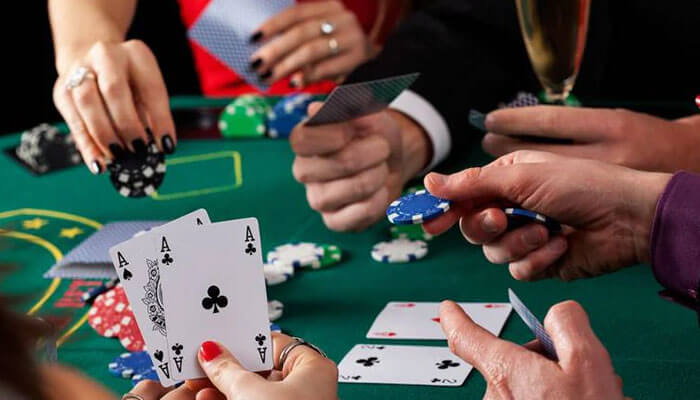
Stud Poker is a game where players receive several face-down (hole cards) and several face-up (upcards). The unequal information among players creates excitement and challenge. Every decision must be based on observing the opponent’s face-up cards, combined with the probability of improving your own hand.
The history of Stud Poker dates back to the American Civil War in the 19th century, with the first 5-card Stud variant appearing in bars. By the 1960s, 7-card Stud had become popular in major casinos. Digital versions of both variants now allow for a more flexible and convenient experience.
5-card Stud: Each player receives one face-down card and four face-up cards. 7-card Stud: Three face-down cards and four face-up cards. This difference creates distinct strategic depth, from stack management to reading opponents’ cards.
A Guide to Playing 5-Card Stud Poker Effectively for Beginners
How to Deal Cards in Stud Poker
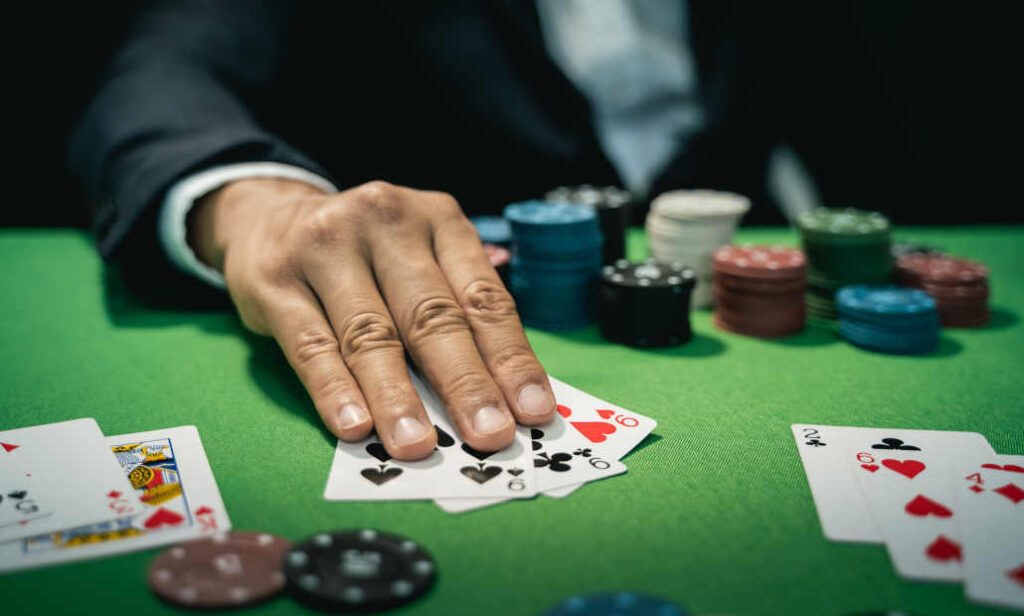
Two face-down (hole cards) and one face-up (door card)
The first betting round (Third Street) is based on the face-up card; the player with the lowest card brings in.
Next, face-up cards are dealt in each round (Fourth Street, Fifth Street, Sixth Street).
The final card (River) is dealt face down, creating an element of surprise and requiring card reading skills.
All these steps are conducted transparently and fairly, ensuring all players have a chance to win based on skill.
Detailed Betting Rounds
- Ante: A mandatory bet to set the pace for the game.
- Third Street: The first betting round, determining the initial strategy.
- Fourth Street & Fifth Street: Receive additional face-up cards; from Fifth Street onwards, the betting limit usually doubles.
- Sixth Street & River: The final betting round, where the last card is dealt face down, and the winner is decided.
Actions in Poker
- Fold: Fold when the chances of winning are low, preserving your stack.
- Call: Match your opponent’s bet.
- Raise: Increase your bet to put pressure on your opponent and gain the upper hand.
- Check: Act when there is no prior bet.
Each decision must be based on the strength of your hand, your ability to improve, your opponent’s actions, and your seating position. Observing your opponent’s face-up cards is key to making the right decision.
Determining the Winner
The winner is determined by the highest hand: Royal Flush > Straight Flush > Four of a Kind > Full House > Flush > Straight > Three of a Kind > Two Pair > One Pair > High Card. When multiple players have the same hand, the value of the tie card will determine the winner.
How to Play Stud Poker Effectively
Basic Strategies
Capital Management: Bet no more than 10% of your total capital per hand, and set win/loss limits to control your emotions.
Reading Opponents’ Hands: Observe the face-up cards, betting patterns, and behavior of your opponents to predict the range of hands they might hold.
Playing Position: Observe the opponent’s actions from behind to make more accurate decisions; the front-hand position requires more caution. Understanding your position optimizes your strategy and reduces risk.
Important Notes
- Stable Mindset: Avoid chasing after losses; stay calm to make sound decisions.
- Update Knowledge: Monitor changes, new versions, and learn from the experience of other players.
- Play Planned: Use statistical tools, track progress, evaluate playing styles, and adjust your strategy.
Advanced Tips
To succeed in Stud Poker, combine the following elements:
- Carefully observe each betting round and identify your opponents’ actions.
- Use information from face-up cards to make informed decisions about folding, calling, or raising.
- Adjust your strategy based on the number of players remaining at the table.
- Remember the cards that have been played to predict the probability of strong combinations appearing.
- Practice continuously to hone your card-reading skills and emotional control.